
What Do Pokémon Card Rarities Mean? A Beginner's Guide
Learn what Pokémon card rarities mean, how to read rarity symbols, and how modern rarities like Illustration Rare work.

Pokémon card rarity tells you how common or uncommon a card type is within a set. It is shown through a symbol near the bottom of the card. Rarity helps collectors sort cards, understand what they pulled from a pack, and identify special cards at a glance.
One thing to understand from the start: rarity does not automatically equal value. We will cover that in more detail later, but it is worth keeping in mind as you work through this guide.
If you have opened modern packs and found yourself confused by terms like Double Rare, Illustration Rare, or Trainer Gallery, this guide is for you.
Quick answer: A Pokémon card’s rarity is shown by the symbol near the bottom of the card: a black circle is Common, a black diamond is Uncommon, and a black star is Rare. Modern Scarlet and Violet era cards add tiers above that, including Double Rare (two black stars), Ultra Rare (two silver stars), Illustration Rare (one gold star), Special Illustration Rare (two gold stars), and Hyper Rare (three gold stars). Rarity does not automatically equal value.
Where to Find the Rarity on a Pokémon Card
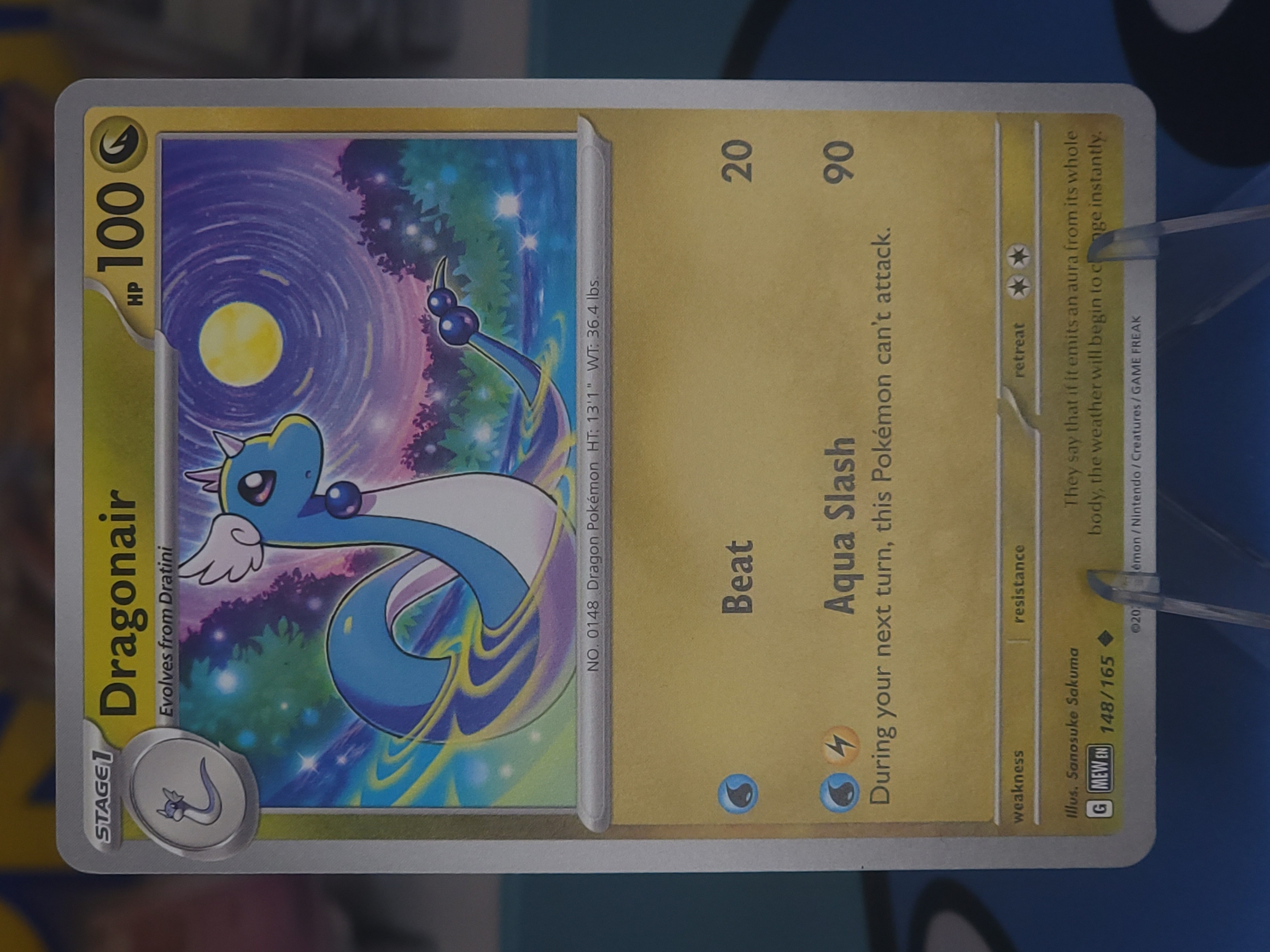
On most modern Pokémon cards, you will find the rarity symbol near the bottom of the card, usually next to the card number and set symbol. The symbol itself is what indicates rarity. The names collectors and databases use, like “Illustration Rare” or “Double Rare,” describe what that symbol means. Those names are not always printed on the card itself.
The exact placement and format can vary depending on when the card was printed and whether it is an English or Japanese version.
Example: a Dragonair from the Scarlet and Violet 151 set. The card number, set symbol, and rarity symbol all appear near the bottom of the card.
The Basic Rarity Symbols
These three symbols have been part of Pokémon TCG since the beginning and still appear across many eras of cards.
Common
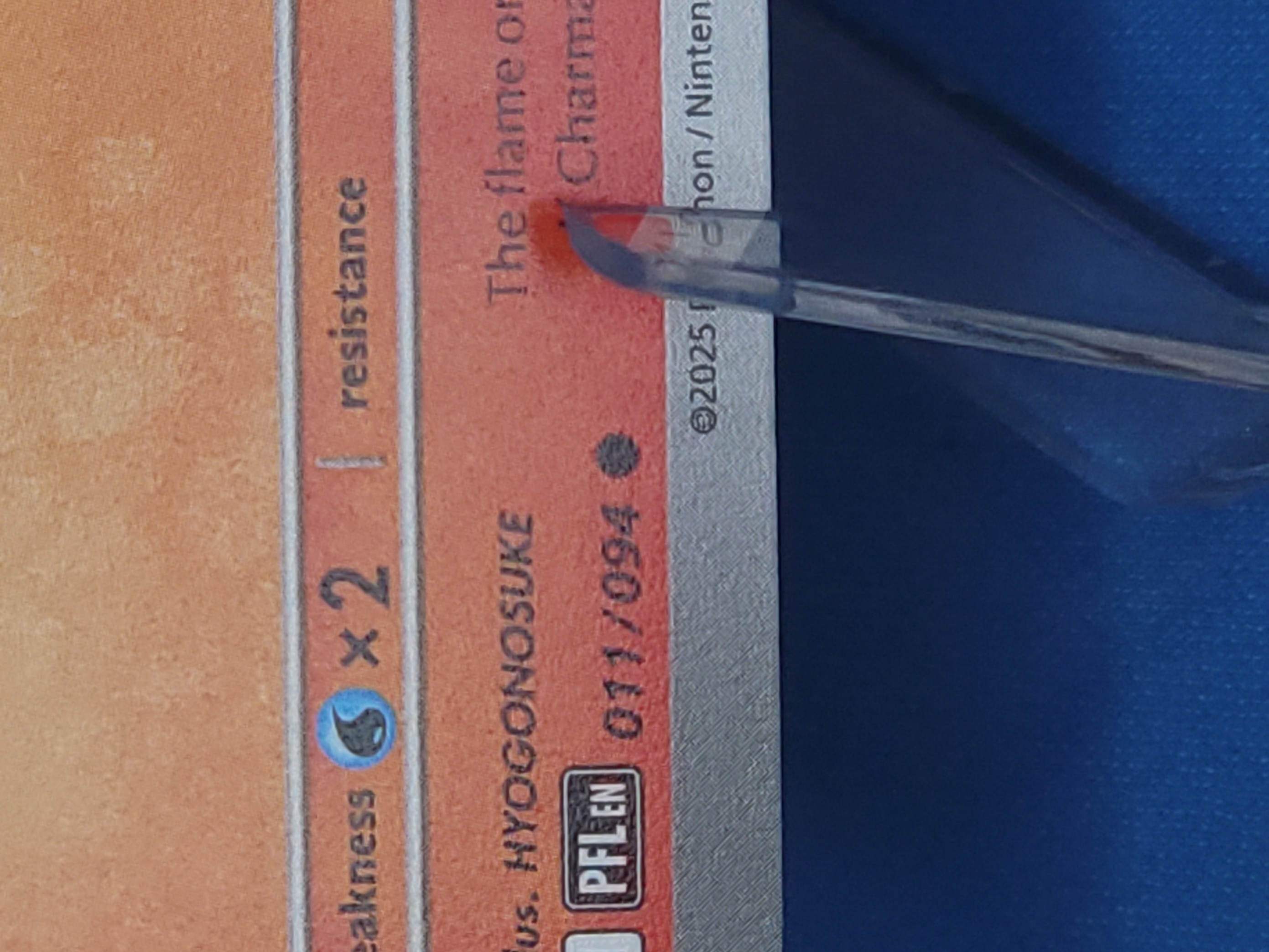
Symbol:  Black circle
Commons are the most frequently found cards in a pack. They are usually basic Pokémon, basic Energy cards, or straightforward Trainer cards.
Uncommon
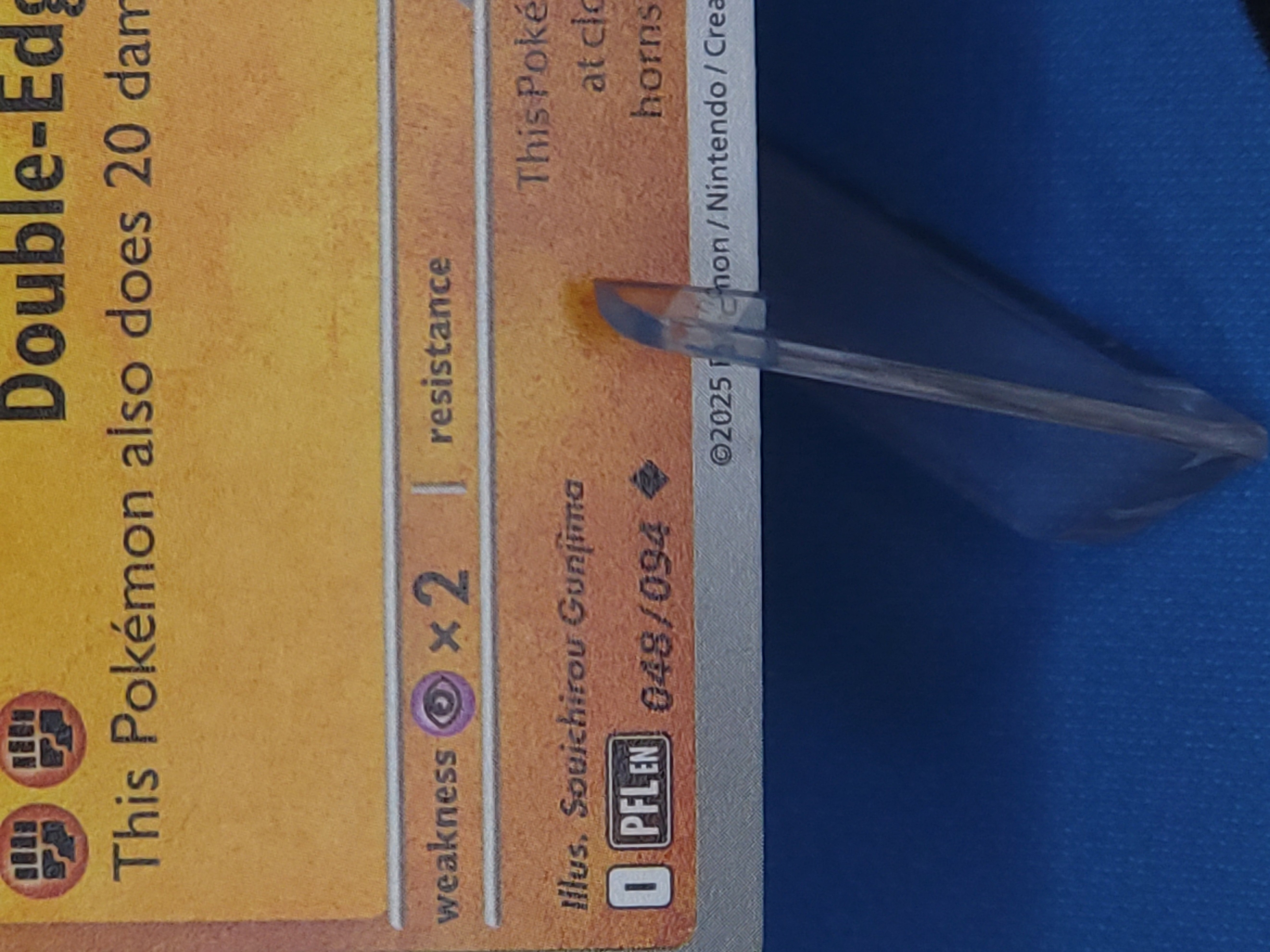
Symbol:  Black diamond
Uncommons appear less often than commons in each pack. They tend to be evolved Pokémon or Trainer cards with more specific effects.
Rare
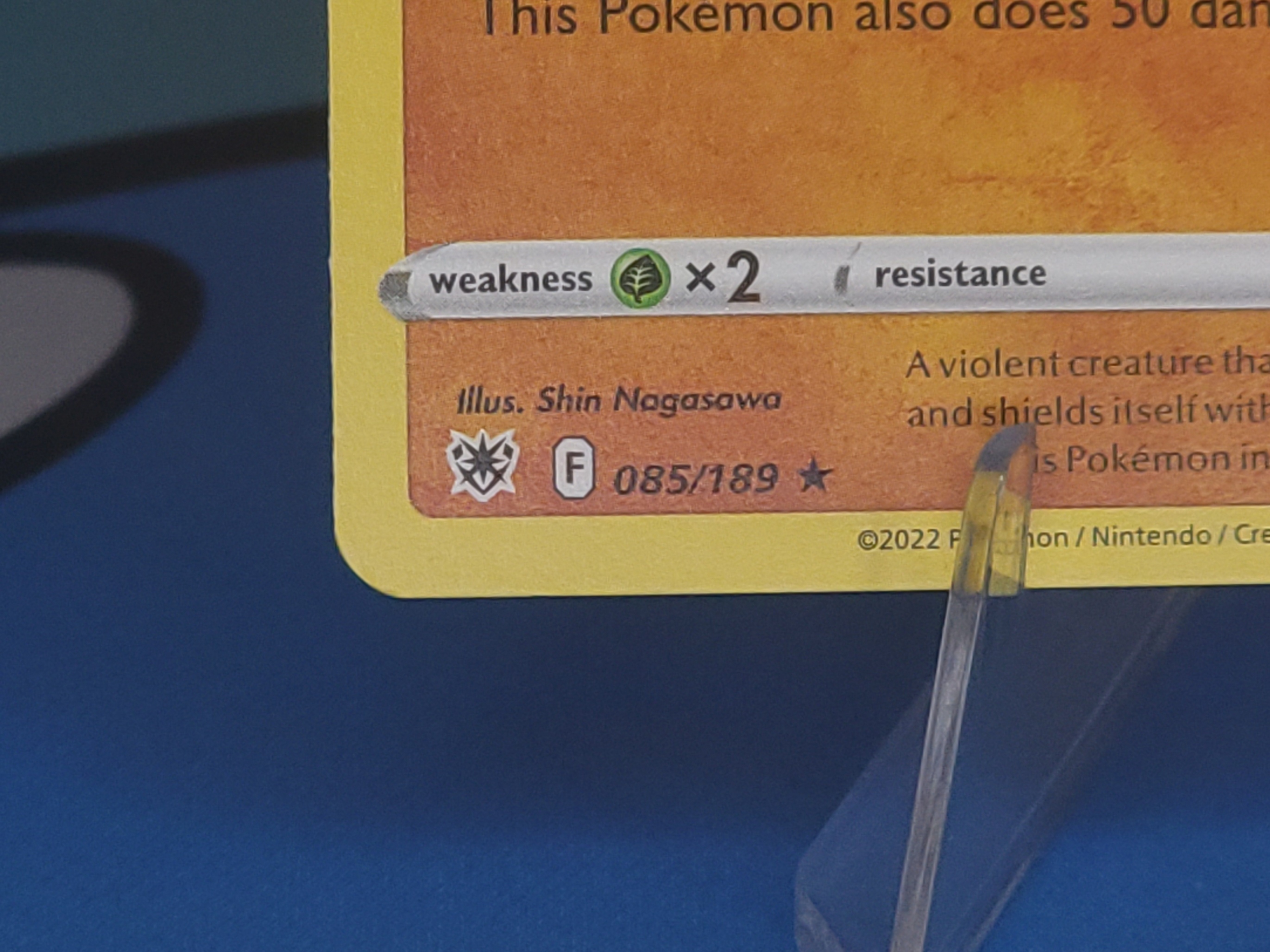
Symbol:  Black star
Most modern booster packs include at least one card at the Rare level or above, though pack structure can vary by era and product. In older sets, pulling a Rare was the main goal. In modern sets, a standard Rare is more of a baseline.
Holo Rare vs. Reverse Holo
Two treatments beginners often encounter alongside standard rares.
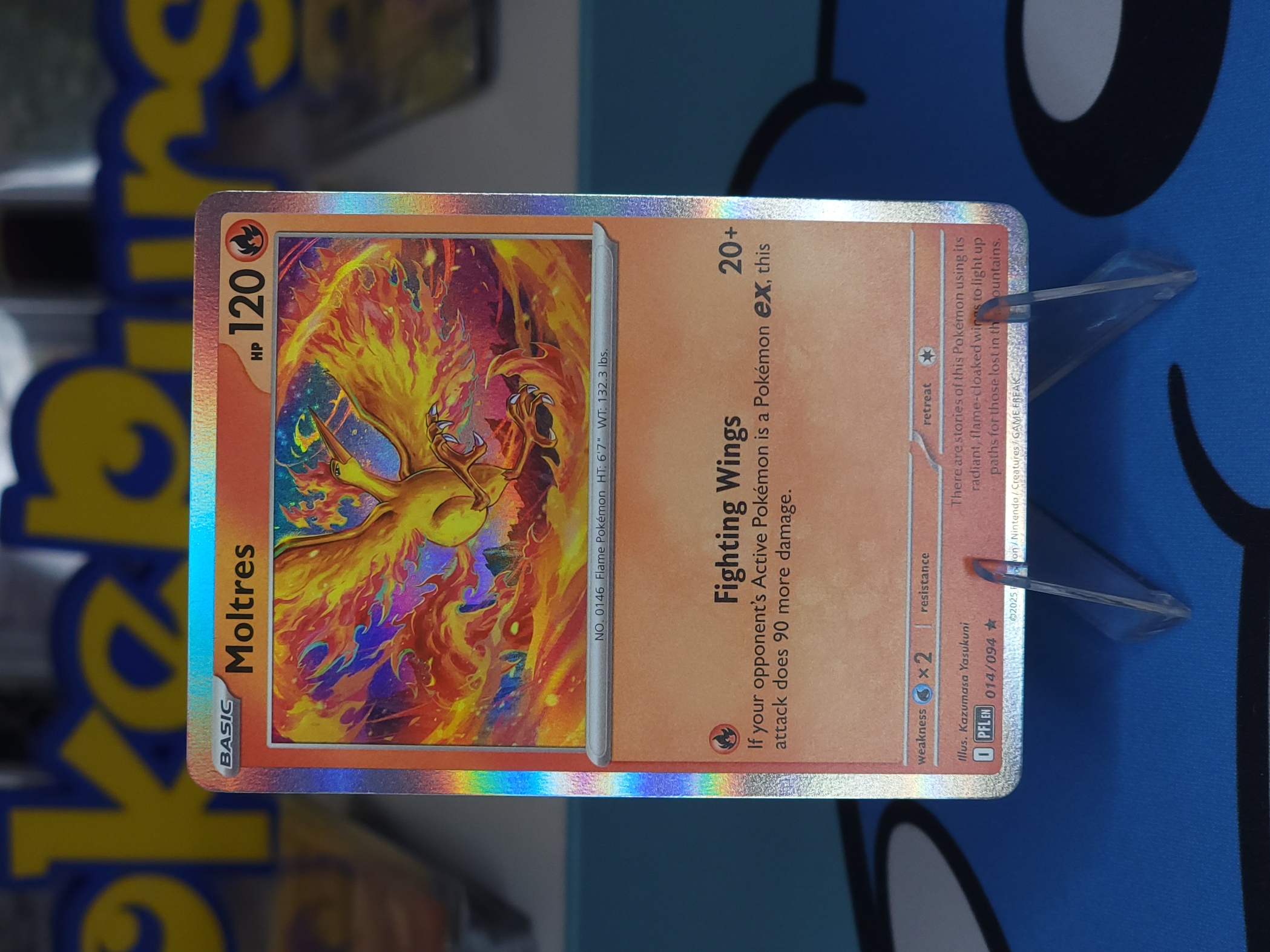
A holo rare has a foil or shiny finish in the artwork window. The card is still a standard Rare by rarity, but the foil makes it more visually striking.
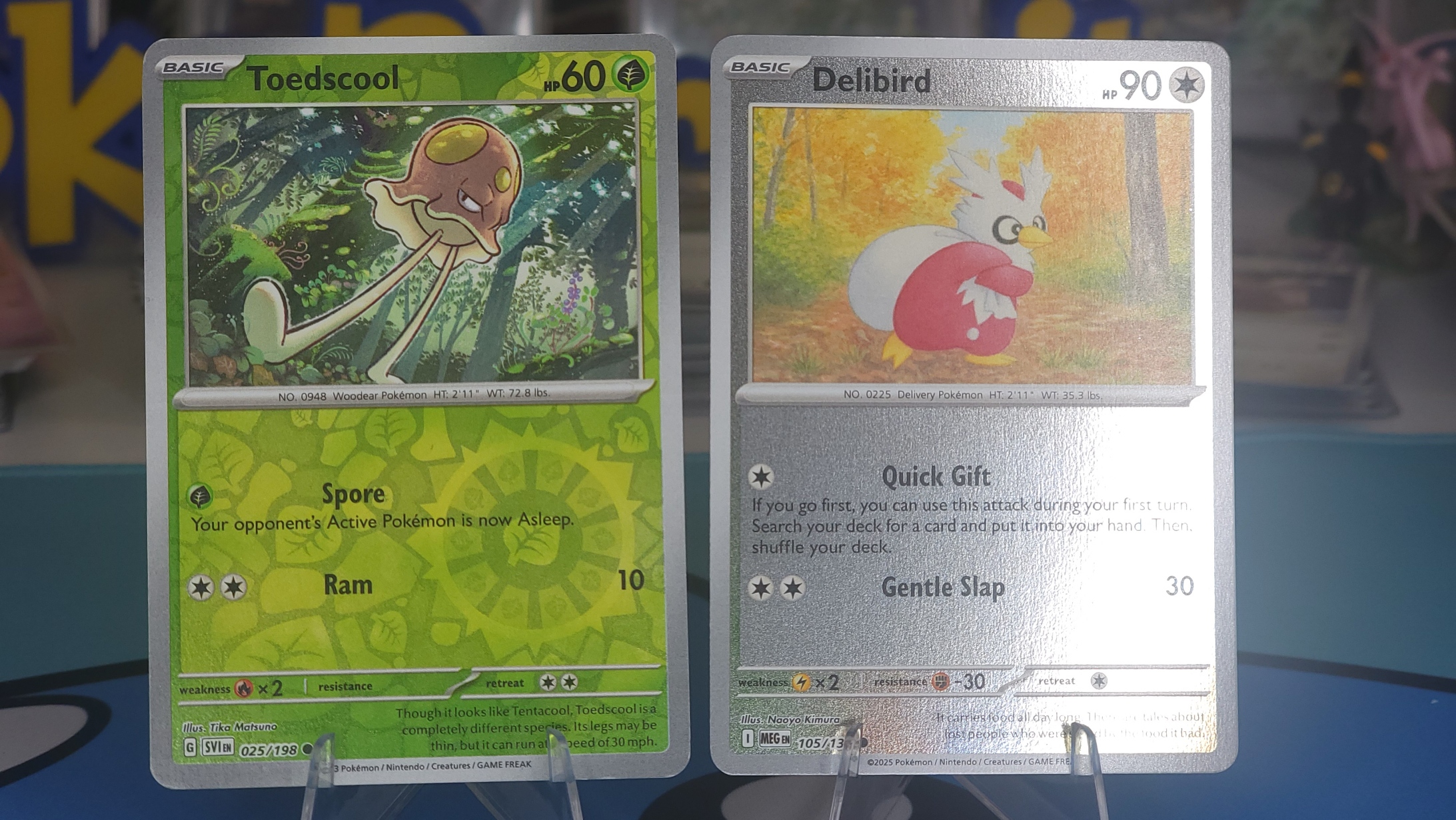
A reverse holo has the foil treatment applied to the card background outside the artwork area instead. Reverse holos exist at multiple rarity levels, including commons, uncommons, and rares. The exact foil pattern varies by era and set.
Note: this example shows a Scarlet and Violet or Mega Evolution era reverse holo pattern. Reverse holo finishes vary across eras.
Black Star Promo
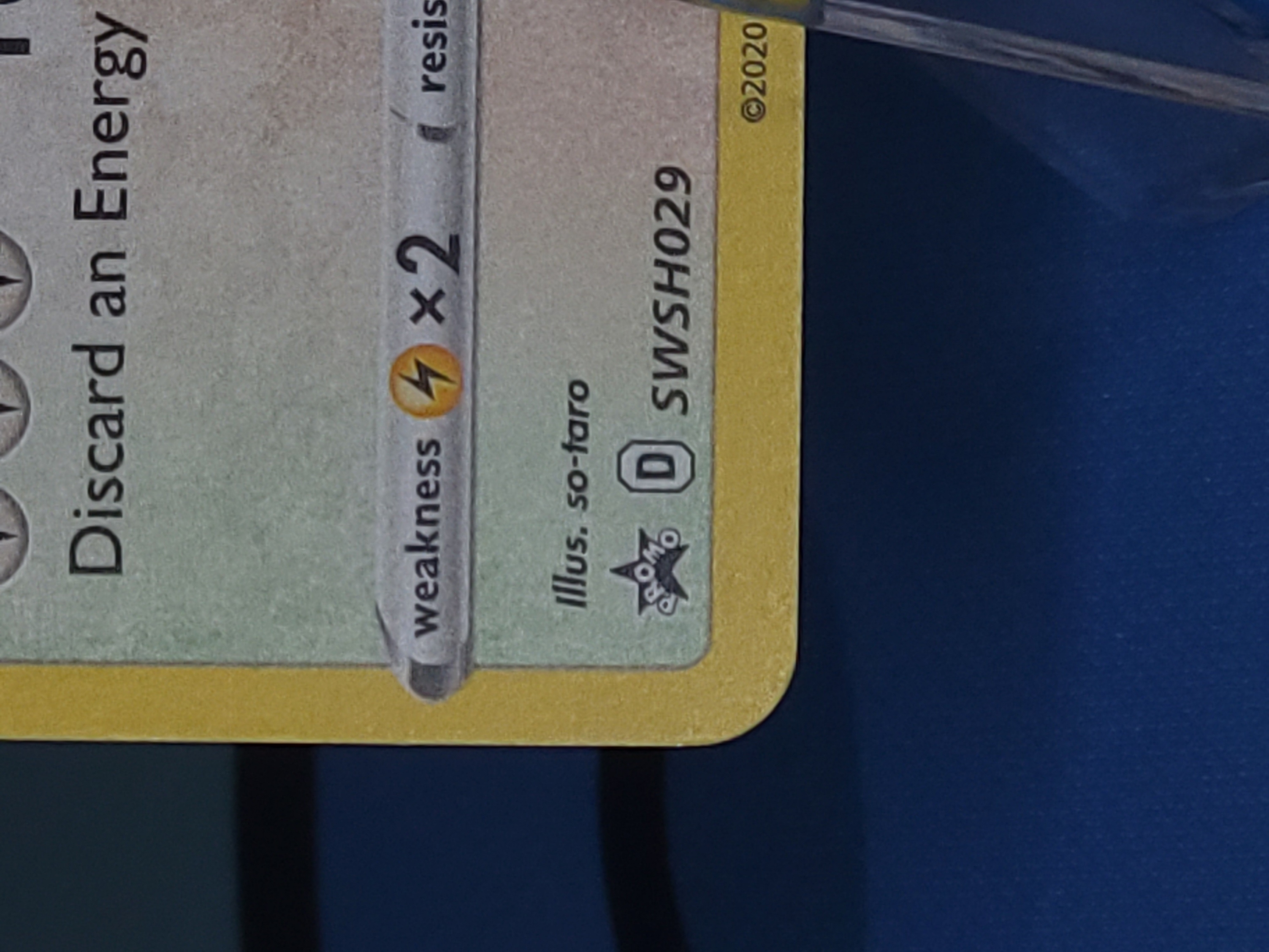
Symbol:  Black star with “PROMO” text
Black Star Promos are special promotional cards that are not part of the main numbered set. Beginners often encounter them inside collection boxes, tins, Elite Trainer Boxes, and special bundles. They typically carry their own promo numbering rather than matching the main set checklist.
Promo cards can be very collectible, but promo status alone does not determine value. Some promos are rare and sought-after. Others are widely distributed and common finds.
Sword and Shield Era Rarities
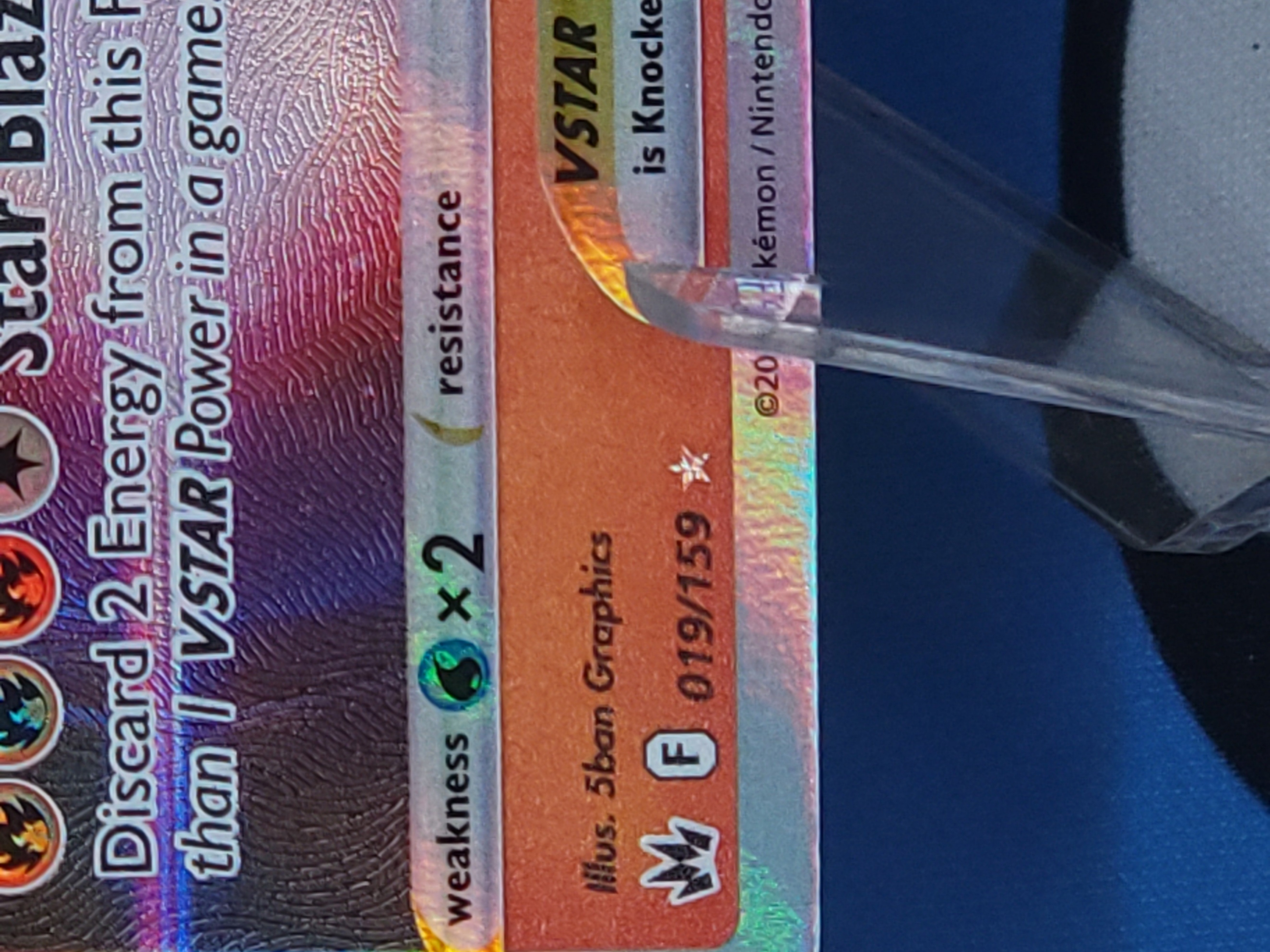
Before getting into Sword and Shield subsets, it helps to understand why the SWSH rarity system can be confusing for beginners.
Sword and Shield era cards used a silver star for a wide range of higher-rarity cards: standard Pokémon V and VMAX cards, highly sought-after Alternate Art cards, and Radiant Rare cards all share the same printed silver star symbol. The symbol alone does not tell you what kind of card you have or how collectible it is.
The silver star appeared on everything from standard V cards to highly sought-after Alternate Arts. The symbol alone does not tell you which type you have.
For SWSH cards, collector databases like TCGPlayer fill in the gap by using more specific terms such as Ultra Rare, Alt Art, and Radiant Rare to describe cards that all look the same at the symbol level. If you pull a SWSH card with a silver star, checking a database by card number and set is the most reliable way to know what you actually have.
Scarlet and Violet’s multi-colored star system was designed to give collectors clearer information directly on the card. That distinction is worth keeping in mind when you see silver stars across different eras.
Trainer Gallery
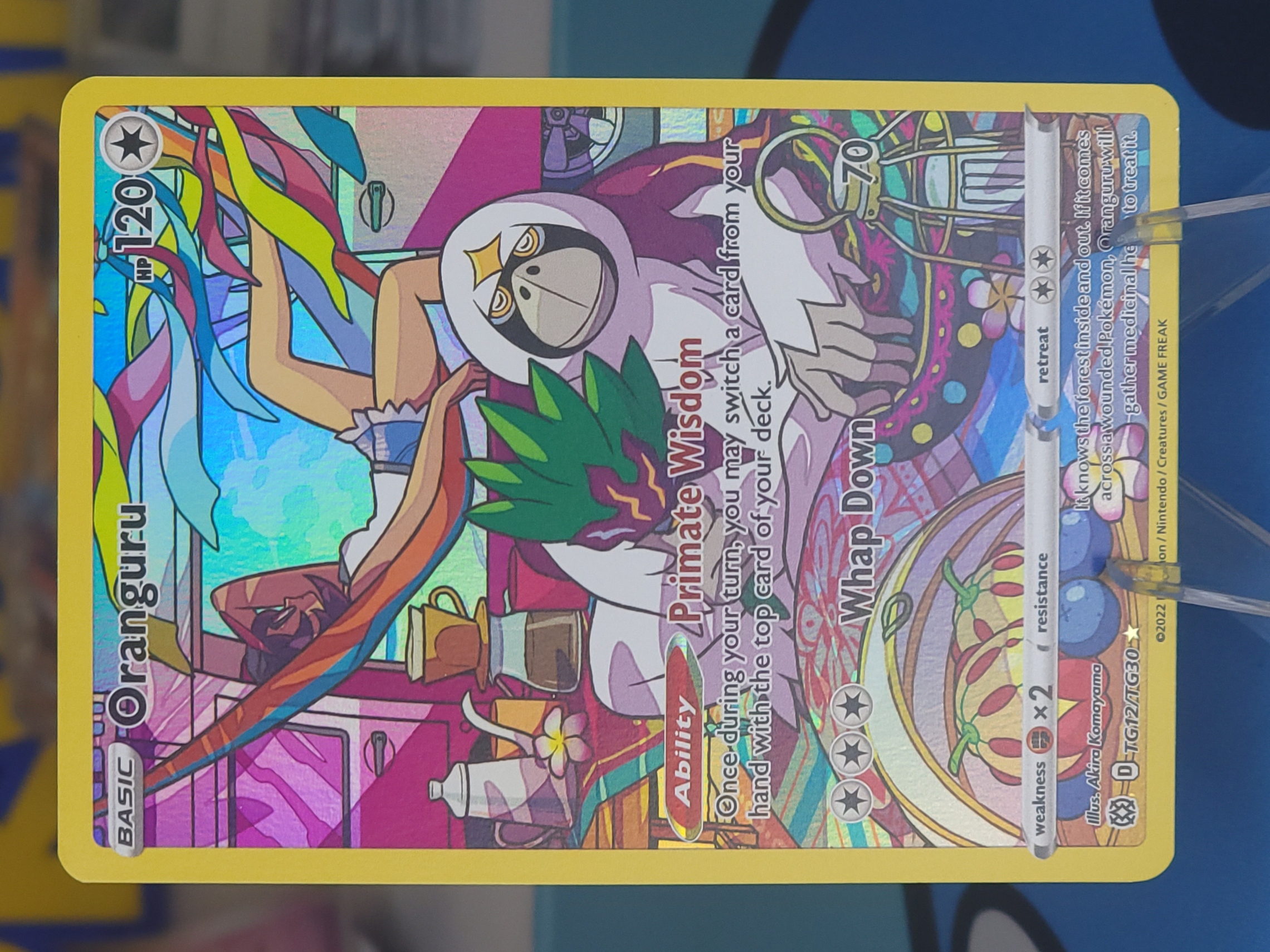
Trainer Gallery cards appeared in several Sword and Shield era sets. They feature Pokémon paired with trainers or character-focused artwork. These cards carry their own numbering beginning with TG and sit outside the main set card count. Within the Trainer Gallery subset, cards have their own internal rarity tiers, some of which also use a silver star, separate from the main set silver star system described above.
Galarian Gallery
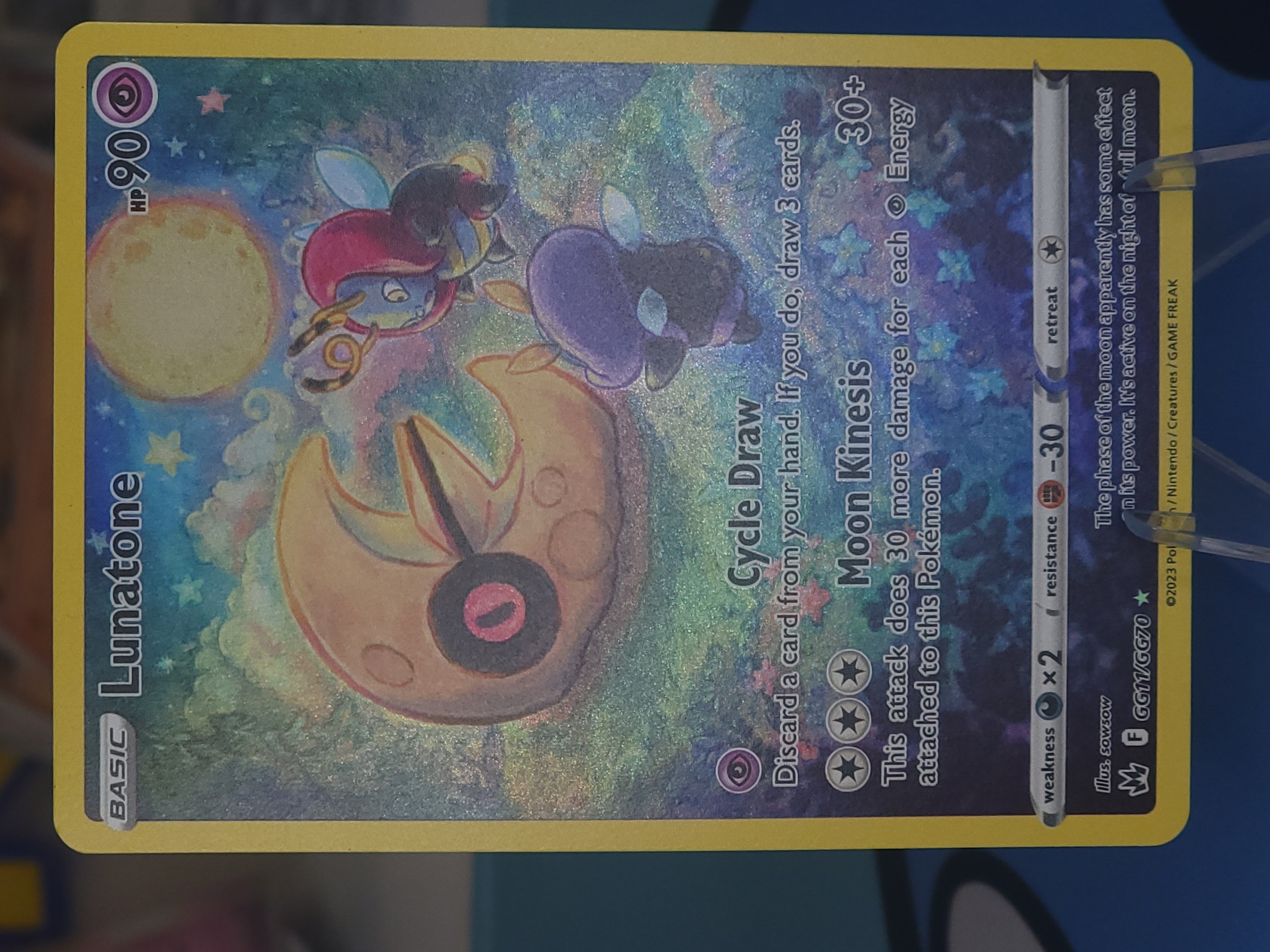
Galarian Gallery cards are associated with Crown Zenith. They use their own subset numbering starting with GG and feature a similar character-artwork focus to Trainer Gallery cards. Like Trainer Gallery, cards within this subset carry their own internal silver star rarity tiers.
Scarlet and Violet Era Rarities
Starting with the Scarlet and Violet series, modern Pokémon cards use a more detailed rarity symbol system near the card number. Instead of only the classic circle, diamond, and star, many cards now use combinations of black, silver, and gold stars to indicate higher rarity tiers.
The card itself usually shows the symbol, not a written label like “Illustration Rare.” The rarity name is how collectors, official checklists, and card databases describe that symbol. This is why learning the symbols matters.
Note: the silver and gold star symbols described in this section are specific to the Scarlet and Violet era. A silver star in an earlier era like Sword and Shield carries different meaning, as covered above.
Double Rare
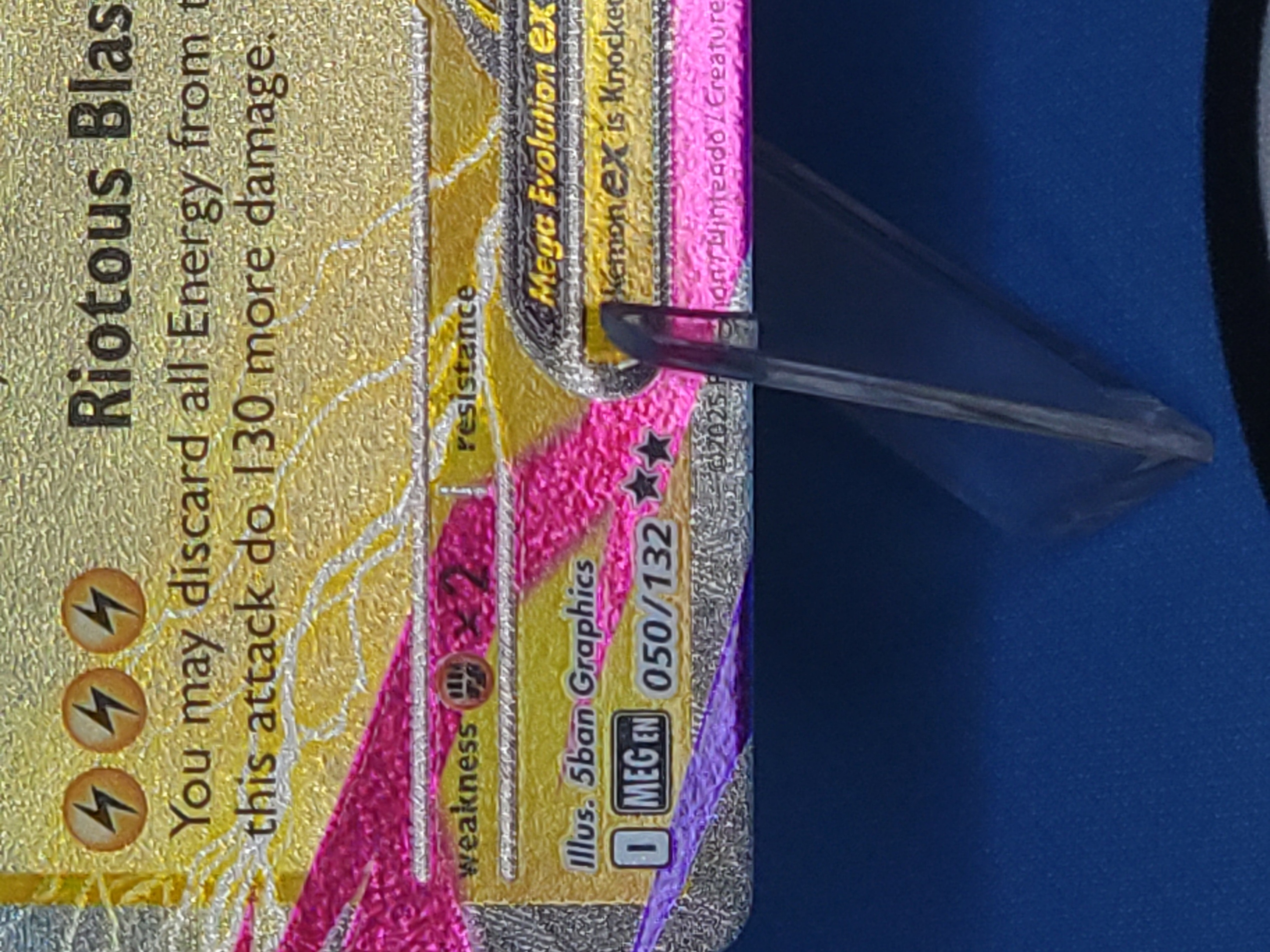
Symbol:  Two black stars
Double Rare cards are usually Pokémon ex cards. They have elevated HP, strong attacks, and a more striking visual presentation than standard rares.
Ultra Rare
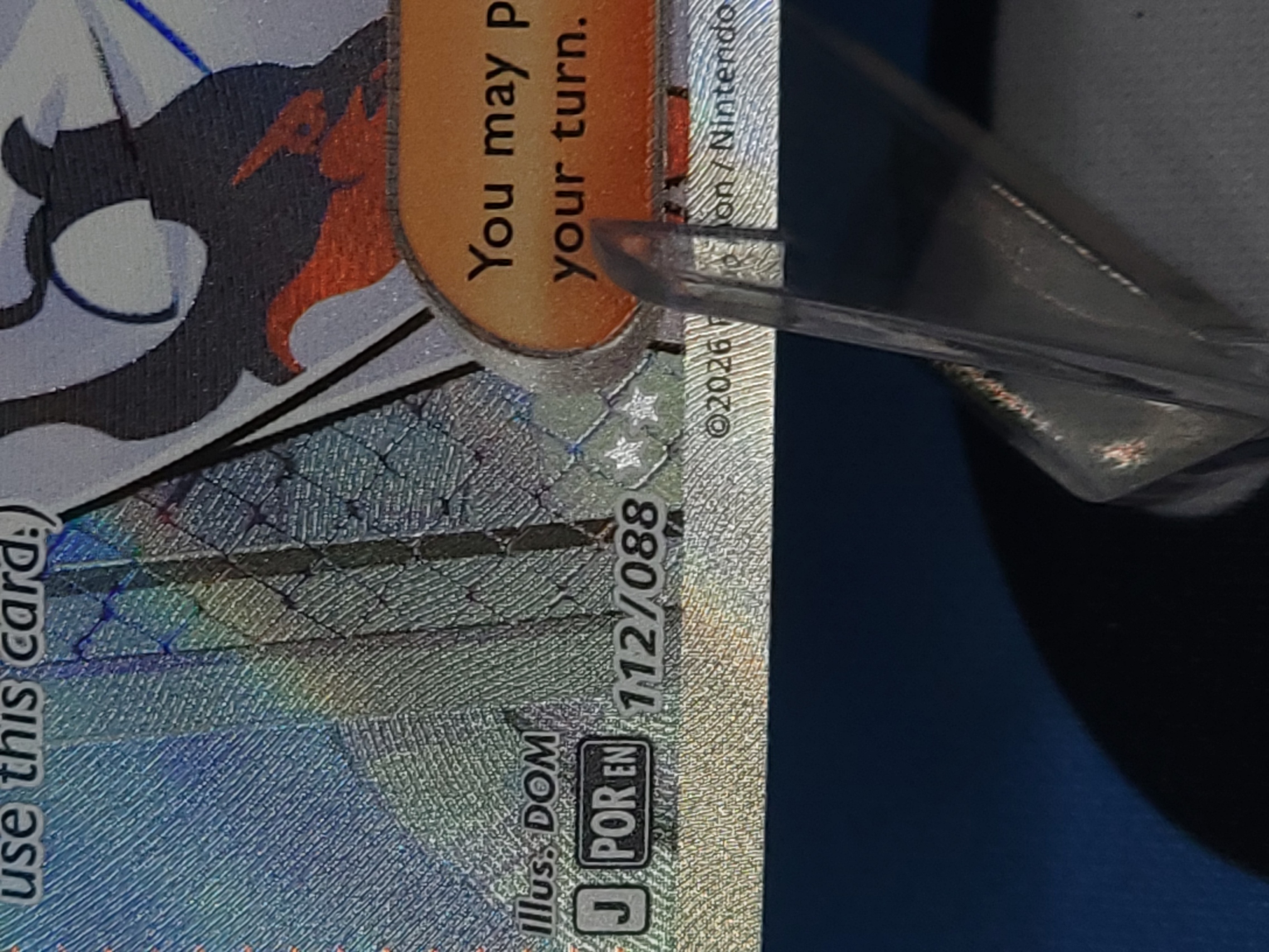
Symbol:  Two silver stars
Ultra Rare cards typically feature full-art treatments, including Full Art Pokémon ex and Full Art Trainer cards. The artwork extends across the entire card face.
Illustration Rare
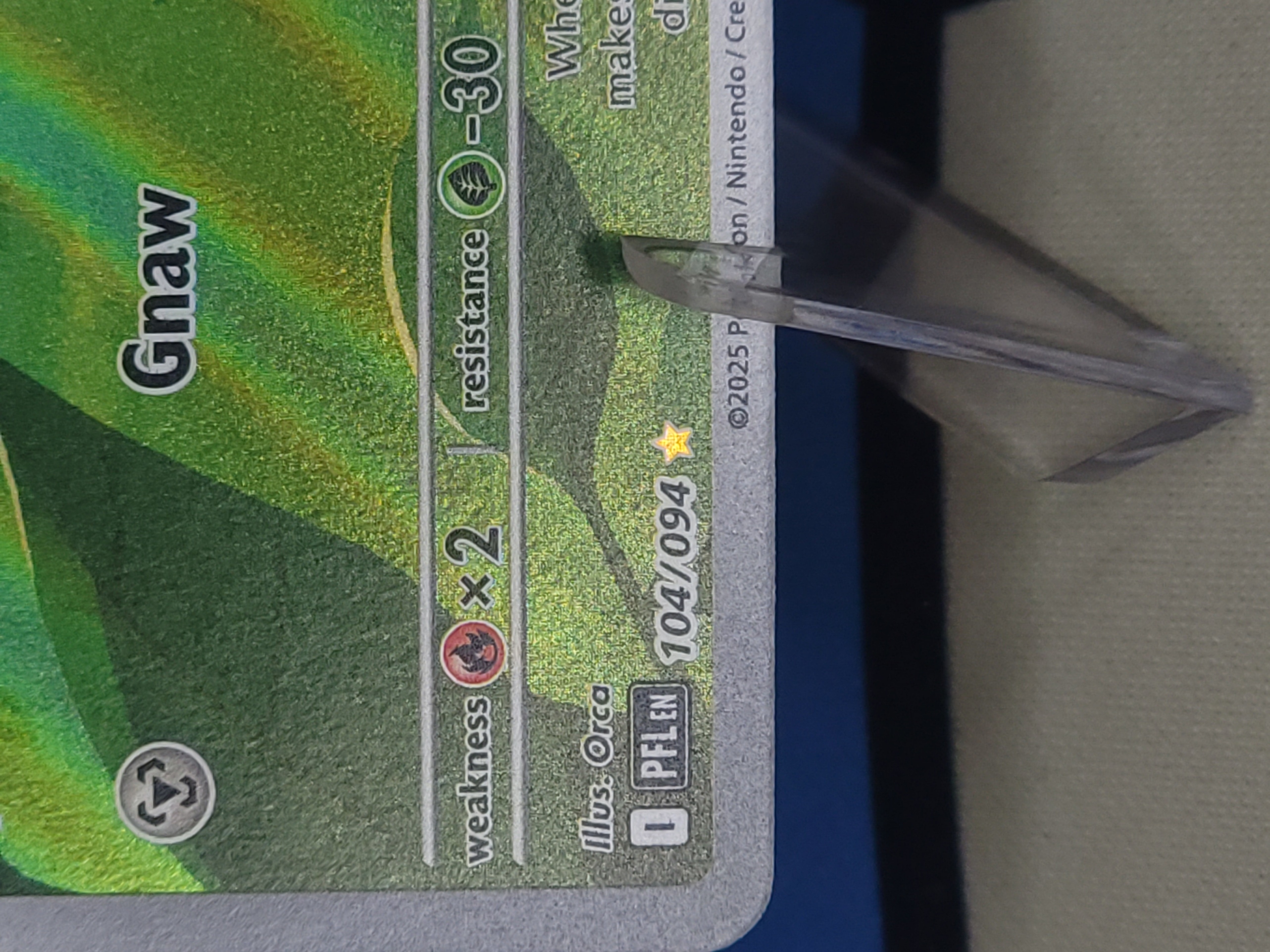
Symbol:  One gold star
Illustration Rares feature full-card illustrated artwork with a painterly or storybook quality. They are often underestimated by newer collectors but are frequently among the best-looking cards in a set.
Special Illustration Rare
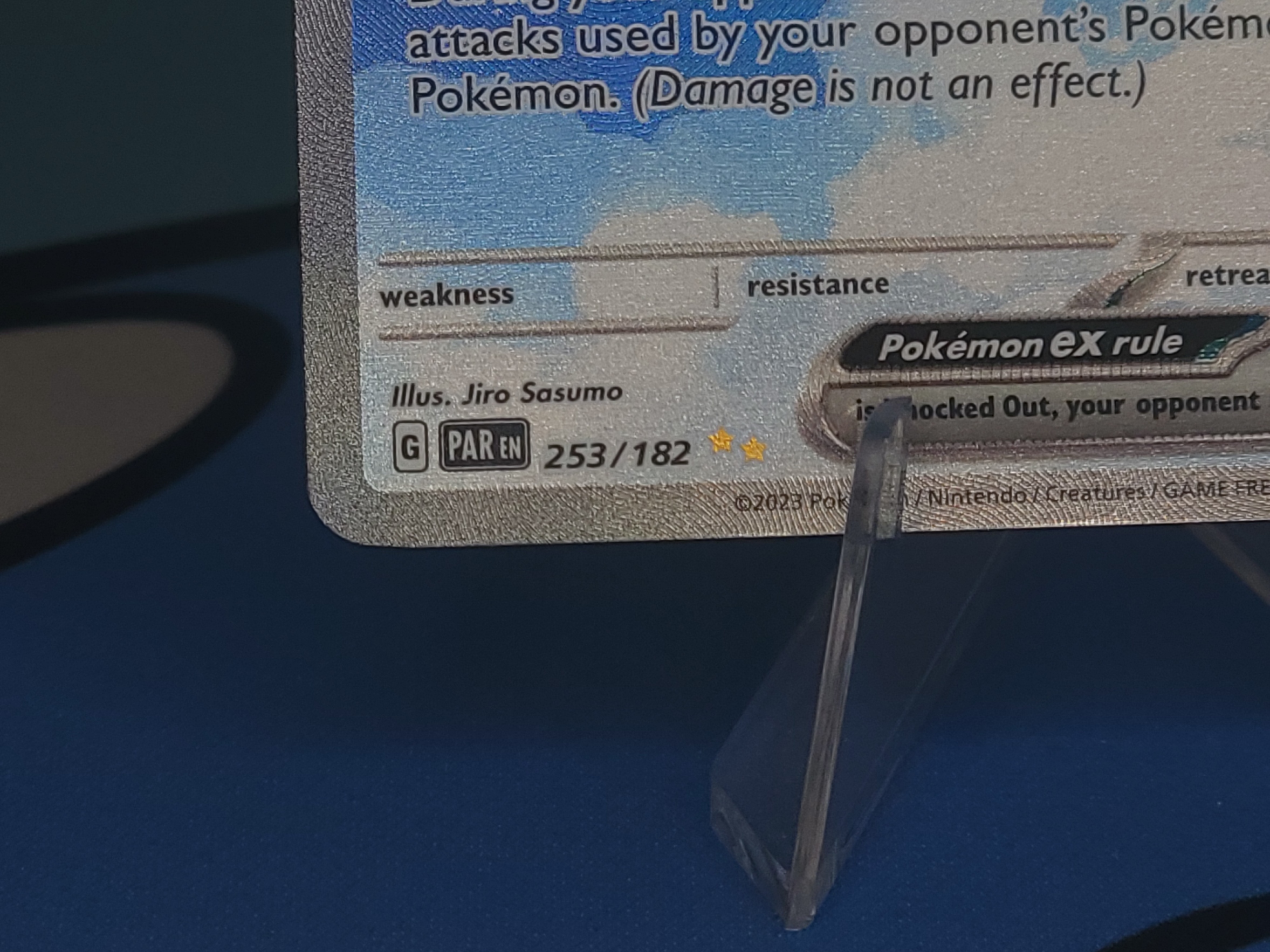
Symbol:  Two gold stars
Special Illustration Rares, often called SIRs, are among the most sought-after cards in modern sets. The artwork typically covers the entire card with a more elaborate illustrated scene than standard Illustration Rares.
Hyper Rare
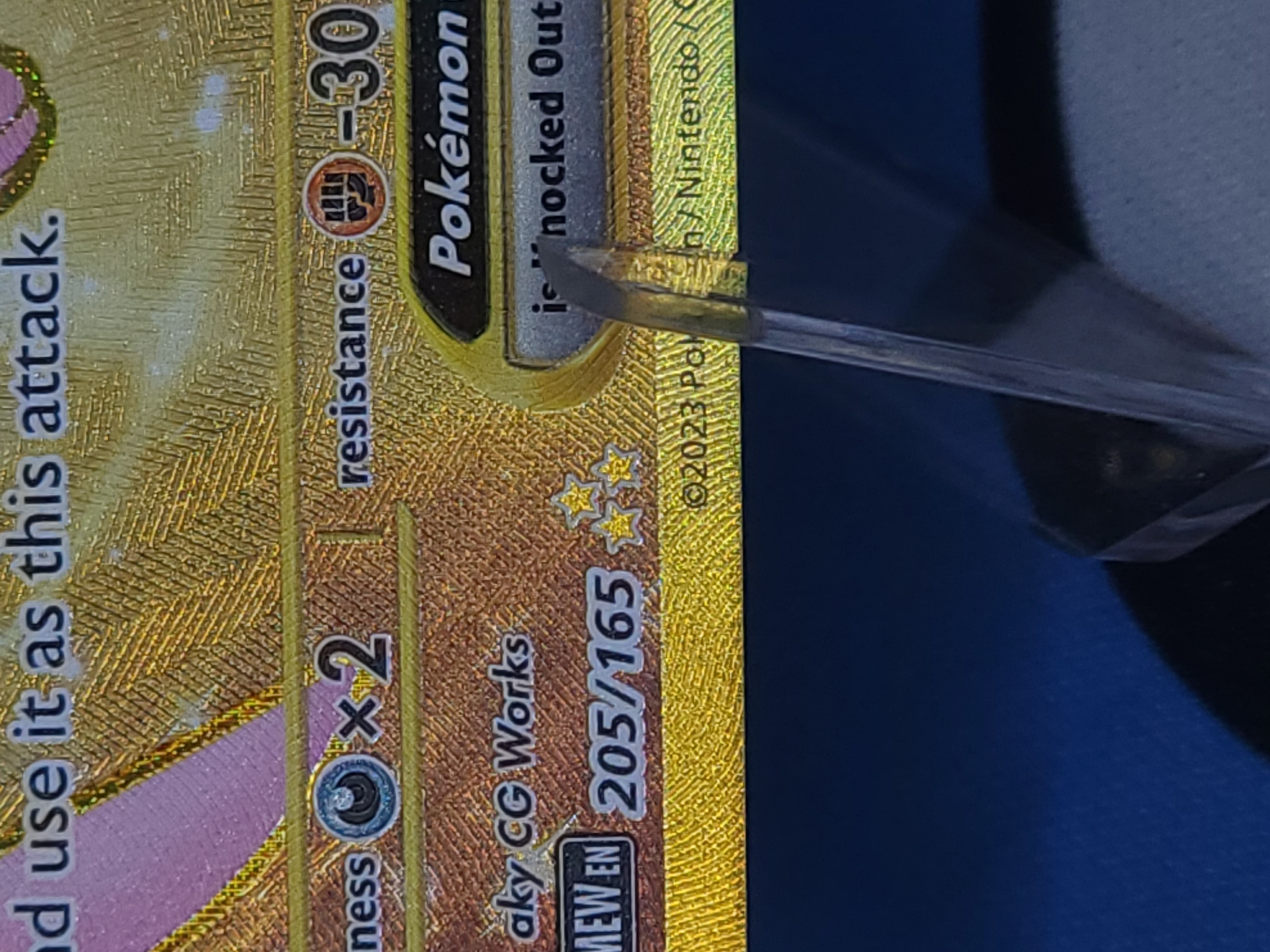
Symbol:  Three gold stars
Hyper Rares are gold-style cards in the Scarlet and Violet era. Collectors often call them gold cards. They feature gold textured foil and represent the highest rarity tier in most Scarlet and Violet sets.
Other Set-Specific Rarities You May See
Some sets include additional rarities beyond the standard tiers above. These are set-specific and do not appear in every set.
Ace Spec Rare
Ace Spec cards are special Trainer cards that appear in certain Scarlet and Violet sets. They have a distinct visual treatment and are especially relevant for gameplay: only one Ace Spec card can be included in a competitive deck.
Shiny Rare and Shiny Ultra Rare
Shiny Rare Symbol:  Shiny Ultra Rare Symbol:
Some shiny-themed sets include Shiny Rare and Shiny Ultra Rare cards. These feature alternate-color Pokémon with shiny-focused rarity symbols and visual treatments, and typically appear in sets built around the shiny theme rather than across the full Scarlet and Violet lineup. Collectors commonly call the Shiny Rare the “baby shiny” to distinguish it from the higher-tier Shiny Ultra Rare.
Black White Rare
Symbol: 
 Star order varies by set
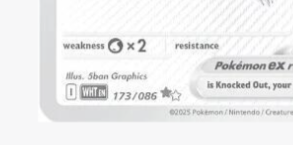
Black White Rare is a set-specific rarity tied to the Scarlet and Violet era Black Bolt and White Flare expansion pair. These are monochrome-style chase cards with a striking visual treatment that differs from standard full-color illustration cards.
One detail worth knowing: the order of the two stars differs depending on which set the card is from. White Flare cards show a black star followed by a white star. Black Bolt cards show a white star followed by a black star.
White Flare: black star then white star. Black Bolt: white star then black star.

Mega Evolution Era Rarities
The Mega Evolution era has introduced new rarity symbols alongside the return of Mega Pokémon. Two newer Mega-era rarities beginners may see are Mega Hyper Rare and Mega Attack Rare.
Mega Hyper Rare
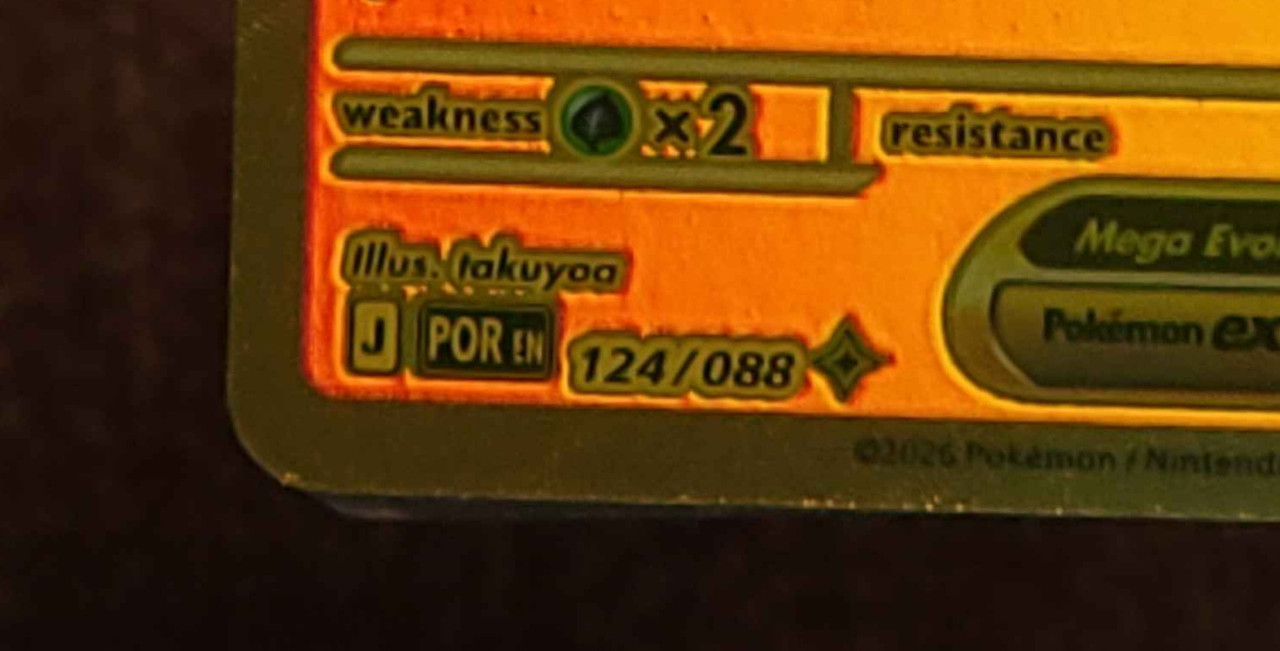
Symbol:  Gold-and-black burst-style symbol (Mega-era specific)
Mega Hyper Rare is for gold-etched Mega Evolution Pokémon ex cards. It uses a gold-and-black burst-style symbol that is distinct from the regular three-gold-star Hyper Rare used in standard Scarlet and Violet sets.
Mega Attack Rare
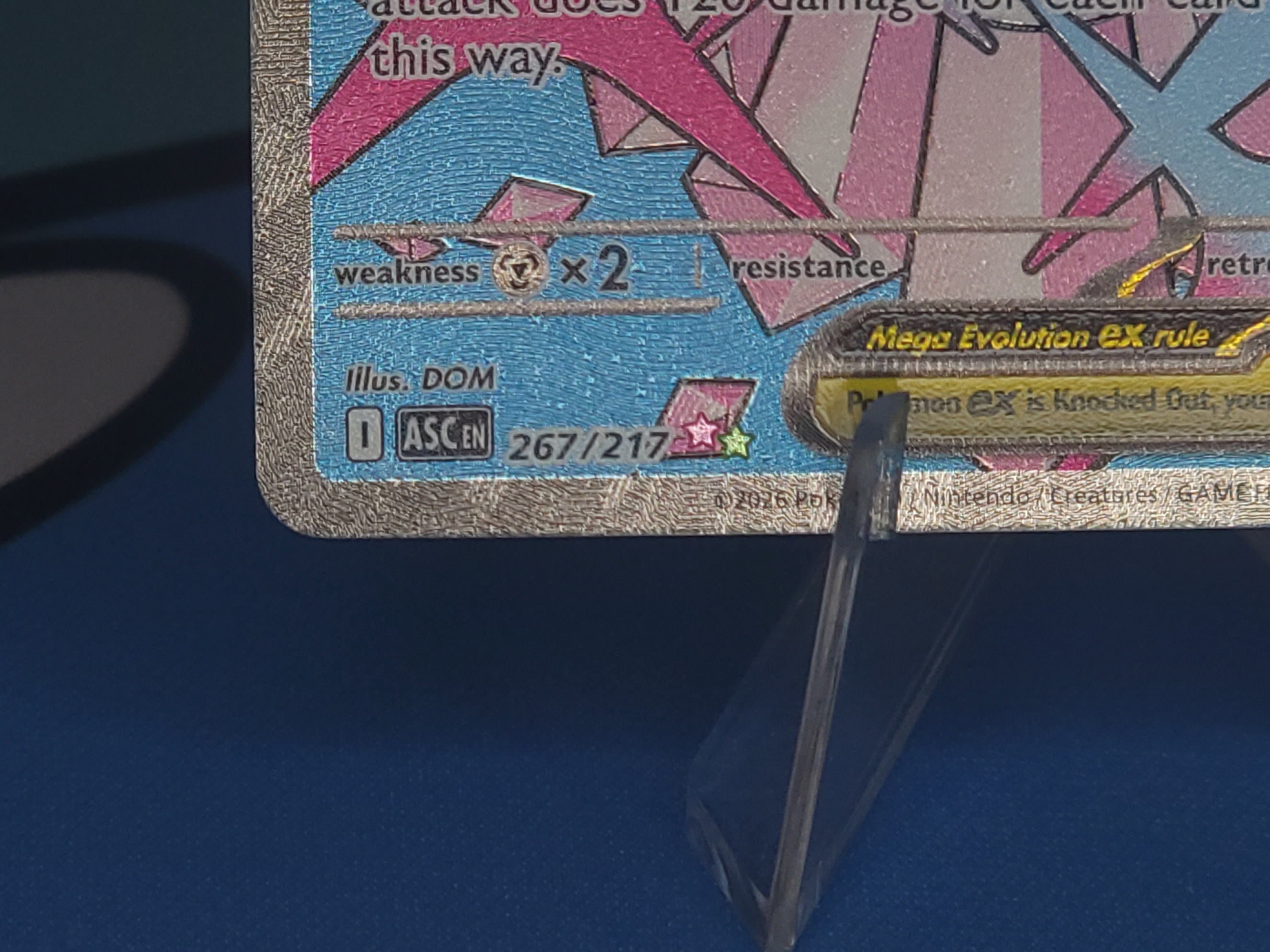
Symbol:  Pink and lime-green side-by-side stars
Mega Attack Rare appears in the Mega Evolution era, including Ascended Heroes. These cards feature Mega Evolution Pokémon ex with bold attack-text artwork as a major part of the design. The rarity symbol uses pink and lime-green side-by-side stars, making it easy to spot once you know what to look for.
Rarity vs. Value
A higher rarity does not mean a card is automatically worth more money. Card value is shaped by several factors:
- Pokémon popularity: A high-rarity card featuring a less popular Pokémon may be worth very little. A lower-rarity card with a fan-favorite can command real prices.
- Artwork: Illustration Rares and Special Illustration Rares with standout artwork tend to hold strong collector interest.
- Condition: A Hyper Rare in played condition is worth far less than the same card in Near Mint. Check out our guide on how to protect Pokémon cards after opening packs if you want to preserve your pulls properly.
- Playability: Cards strong in competitive formats tend to hold value while they are legal. Cards that rotate out of the format often drop.
- Supply and demand: Some sets are printed heavily, pushing prices down even on rare cards. Others have limited print runs and hold value longer.
- Grading: Cards being considered for grading through companies like PSA, CGC, BGS, or TAG need to be in strong condition. Grading can help certain cards, but it is not automatic value. Each company has its own standards, fees, turnaround times, and collector demand, so check whether grading actually makes sense for a card before submitting. Our guide on how to check card condition before buying is a good starting point for understanding what graders look for.
Research the specific card before drawing any conclusions about its worth. Live price pages, like this one for the Charizard ex Special Illustration Rare from Scarlet and Violet 151, show what a card actually sells for on eBay and TCGPlayer right now. Checking real prices beats guessing from the rarity symbol.
Quick Reference Table
| Rarity | Symbol | Era | Beginner Meaning |
|---|---|---|---|
| Common | | Many eras | Basic pack card, multiple per pack |
| Uncommon | | Many eras | Less common than commons |
| Rare | | Many eras | Traditional rare slot; pack structure varies by era |
| Holo Rare | | Many eras | Rare card with foil in the artwork window |
| Black Star Promo | | Promo cards | Special promotional card from products or events |
| Double Rare | | Scarlet and Violet / Mega Evolution | Usually a Pokémon ex card |
| Ultra Rare | | Scarlet and Violet / Mega Evolution | Full-art style card |
| Illustration Rare | | Scarlet and Violet / Mega Evolution | Full illustrated artwork card |
| Special Illustration Rare | | Scarlet and Violet / Mega Evolution | Higher-end illustrated card |
| Hyper Rare | | Scarlet and Violet | Gold-style card |
| Shiny Rare | | Scarlet and Violet (select sets) | Alternate-color shiny Pokémon card |
| Shiny Ultra Rare | | Scarlet and Violet (select sets) | Higher-rarity alternate-color shiny Pokémon card |
| Black White Rare | | Scarlet and Violet, Black Bolt / White Flare | Set-specific monochrome chase card |
| Mega Hyper Rare | | Mega Evolution era | Gold-etched Mega Evolution Pokémon ex card |
| Mega Attack Rare | | Mega Evolution era | Stylized Mega Evolution Pokémon ex card with attack-text artwork |
Practical Advice for Sorting Your Cards
Once your collection starts building up, sorting by rarity makes everything easier to manage.
A simple approach:
- Set aside bulk commons and uncommons together.
- Pull out all rares and holo rares.
- Separate reverse holos from standard rares.
- Pull Pokémon ex cards and full arts into their own group.
- Separate Illustration Rares from the full-art group.
- Keep Special Illustration Rares, Hyper Rares, and special subset cards in protected sleeves or top loaders right away.
If you are not sure what sleeves or storage to use, our guide on how to protect Pokémon cards after opening packs covers the basics.
Putting It Together
Rarity is one of the first things worth understanding as a Pokémon collector. It helps you know what you pulled, how to sort your collection, and what to look for when building a binder or filling gaps.
But always research the specific card, not just the rarity tier. Popularity, artwork, condition, and market demand all matter alongside the symbol at the bottom of the card. If you want to see this in action, look up the Dragonair from Scarlet and Violet 151 we used as an example earlier and compare its price to the chase cards from the same set.
If you are working to complete a set or chase specific rarity slots without relying on pack luck, buying singles is usually the more direct route. You can browse Pokémon singles at PokePursuitTCG.com when you know exactly which card or rarity you are looking for.
Frequently Asked Questions
How do I tell what rarity my Pokémon card is? Look at the symbol near the bottom of the card, next to the card number and set symbol. A black circle means Common, a black diamond means Uncommon, and a black star means Rare. Modern higher tiers use multiple stars in silver or gold, and the table above maps each symbol to its name.
What is the rarest type of Pokémon card in modern sets? In Scarlet and Violet era sets, Special Illustration Rares (two gold stars) and Hyper Rares (three gold stars) sit at the top of the standard pull chart. Which one is worth more varies card by card, and Special Illustration Rares of popular Pokémon are often the most valuable cards in a set.
Does a rarer symbol always mean a more valuable card? No. Value comes from demand, artwork, the Pokémon featured, condition, and print run, not the rarity symbol alone. A popular Illustration Rare can sell for more than a Hyper Rare from the same set.
What is a reverse holo? A reverse holo card has foil on the card body instead of the artwork window. Nearly every common, uncommon, and rare in a modern set has a reverse holo version, and one appears in almost every pack.
Ready to Find Your Next Card?
Browse singles, booster boxes, ETBs, and more at PokePursuitTCG.com.
Shop PokePursuitTCG.com →